 CompanyMade in Detroit | Est. 2026
34 Doors
Episode 7: Willow
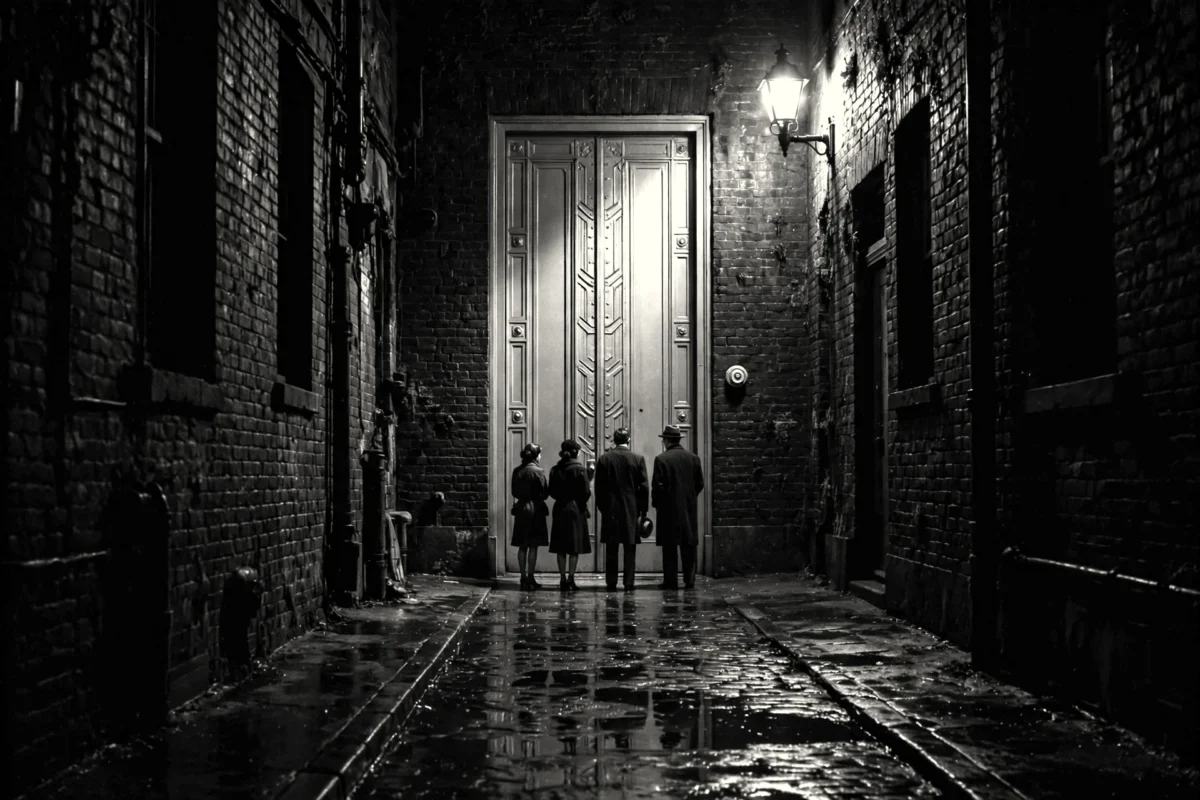
Door Seven is underneath a soul food restaurant, which is the correct place for a secret in Detroit: under dinner. Willow sits below SavannahBlue on Times Square, behind a golden door, and it was the elders’ door to host, which meant the evening ran in the opposite gear from Door Five. At Café d’Mongo’s the young ones were taken out and demonstrated to.
At Willow, Rose and Eddie were taken out themselves, by invitation of their own standing, and Marcus arrived having prepared to be a guest the way other men prepare to be examined.
I know this one four times over. Dana told me her version on a Tuesday, Marcus his on a Thursday, and Rose hers across two Sunday whiskies, and Eddie, who tells stories the way he makes decisions, told me his in one sentence and considered the matter closed. The sentence was: “The boy rang the bell like he meant it.” The four accounts agree on everything except who the evening belonged to, which is how I know they are all true.
The preparation had a domestic chapter, which Dana told me with the air of a woman reporting a haunting she had decided to enjoy. Marcus had printed the article entry. Printed it, on paper, and kept it on the kitchen table for three days, the way previous generations kept a timetable by the telephone, and each evening he read it once more with a pencil put down unused beside it, because there was nothing in it he intended to change, only things he intended to deserve.
Dana watched him from the doorway on the third night with a cup of tea going cold in her hand, and understood that she was not watching a man study a bar. She was watching a man rehearse being ready, and that the rehearsal had an audience of one, and that he knew it, and that neither of them was ever going to mention it. She did not mention it.
She put the tea down and went and stood behind his chair and read the entry over his shoulder, both of them silent, like a couple at a departures board, and he turned the page for them both.
The morning show, for the record, mentioned the record once that week, in a roundup of things February had contained, between a thaw and a traffic study, kindly, the way you mention weather that has passed. Benny’s spring was beginning the way his February had ended: at full volume, to a room that was slowly leaving. I record the temperature because the ledger is the ledger, and it held, that week, at fifteen languages.
Marcus had read the article entry twice. Not skimmed, read, the way a man reads the instructions for something he intends to assemble correctly in front of witnesses. He knew the golden door was at the back of the restaurant and that you rang the bell and waited to be admitted like a caller at a house that had not decided about you yet.
He knew the room seated fifty and kept you for ninety minutes, no more, a door with a curfew. He knew phones were discouraged to the point of theology and that men removed their hats, and he had arranged his entire person around these facts the way a man arranges furniture in a room he hopes to be forgiven in.
Dana watched him prepare the way she now watches everything he does, professionally, with love, and she told me she had caught herself doing something new that week. At Bad Luck Bar she had watched him with an auditor’s eye and kept a drawer for what she found. At Willow she watched him with tenderness, which is the more dangerous instrument, because tenderness raises the price of everything it touches, including an absence.
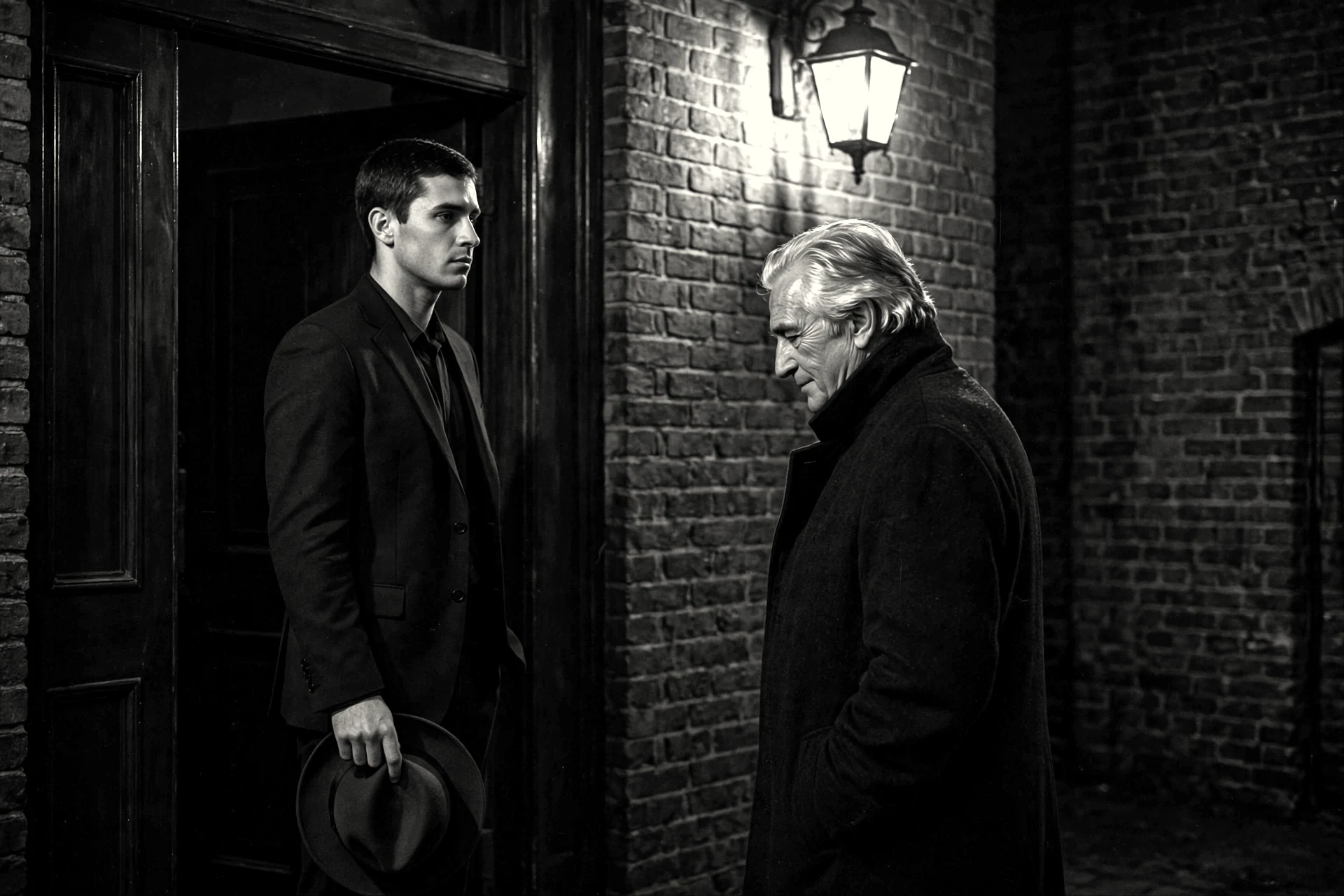
Marcus had his hat off before the door opened. He had it off, in fact, before he rang the bell, standing at the back of the restaurant in the lamplight with his hat in his hand like a man at a graveside or a christening, and Eddie, who does not praise in words what he can praise in posture, looked at the hat, and looked at the bell, and nodded once, the way a foreman signs off on work he will not have to redo. Rose took Dana’s arm.
The bell was rung. The golden door considered them, in its own time, and let them in.
Inside, the room runs on its rules the way a train runs on rails Eddie would approve of. Fifty seats, all of them taken by people who had also read something twice, and a clock you cannot see and can always feel. The bartender received their coats and their hats and their telephones’ surrender without comment, the way a church receives umbrellas.
Ninety minutes, he said, in the tone of a man stating the weather in a country he governs, and the books stay welcome and the hats stay off, and Marcus said, “We know,” with a pride so naked that Dana had to look at the bottles to keep her face arranged.
He had planned the drinks against the clock. This is not a figure of speech. He had a sequence: The Goat first, because the entry said the room was known for it and a man begins where the house is proudest; the Willow Martini second, if the evening allowed a second, which the ninety minutes did, with fourteen to spare by his arithmetic; and the signing fitted between the second drink and the curfew like a train connection he had already walked once in his head.
Eddie ordered an Old Fashioned without looking at anything, the way a man sits in his own chair, and the contrast sat at the table with them all evening and behaved itself: the old man doing by nature what the young man was doing by study, and both of them, in their way, being right.
“You have done this before,” the bartender said to Marcus, not unkindly, setting down the first round.
“I have done the reading before,” said Marcus, and Dana, beside him, felt the whole sentence land somewhere behind her ribs, because it was the truest thing he had said in public all winter. He had not done it before. He had done the reading, twice, for a doorbell, for her, and the room could tell the difference even if he could not.
Rose, who misses nothing that is served at a table she is sitting at, raised her glass to the room at large. “To doors that make you take your hat off,” she said. “There are not enough rooms left that ask a man to be smaller than his entrance.” Eddie drank to it without deciding to, which for Eddie is a standing ovation.
The evening ran like his plan and forgave him for having one. The Goat arrived and justified the reading. The conversation did what conversation does in the elders’ company, which is to say it behaved, and when it did not, Rose corrected it the way a lighthouse corrects a harbor, by being visibly elsewhere and right.
There was exactly one crisis, and it was arithmetical. At the hour mark Marcus looked at the room, and at the second round standing finished, and did the sum he had done at the kitchen table, and announced, with the air of a man reading a tide table, that there was time for the Cobbler if the table wanted the Cobbler, and that the books would still fit, with six minutes to give back to the house. He had it all worked out, including the giving back.
“We will not want the Cobbler,” said Eddie, not unkindly, and not consulting anyone, “because a good evening is not improved by spending its last minutes correctly.” He said it the way he says everything, once, and Marcus, to his credit and Dana’s astonishment, closed the plan the way you close a book you have enjoyed and put it away without a mark in it. It was the best preparation of the whole night, and it was improvised, and Dana saw that too, and filed it where the tenderness keeps its instruments.
Dana told me later that somewhere in that surrendered quarter hour she stopped auditing the evening entirely, and simply watched her fiancé be good at a door, at a table, in a room with a curfew, preparing for things that mattered to her as if they mattered to him, because they did, because she did, and the verdict she has been keeping on him all winter moved, measurably, in the lamplight, from the man who nearly finishes things to the man who is becoming someone else.
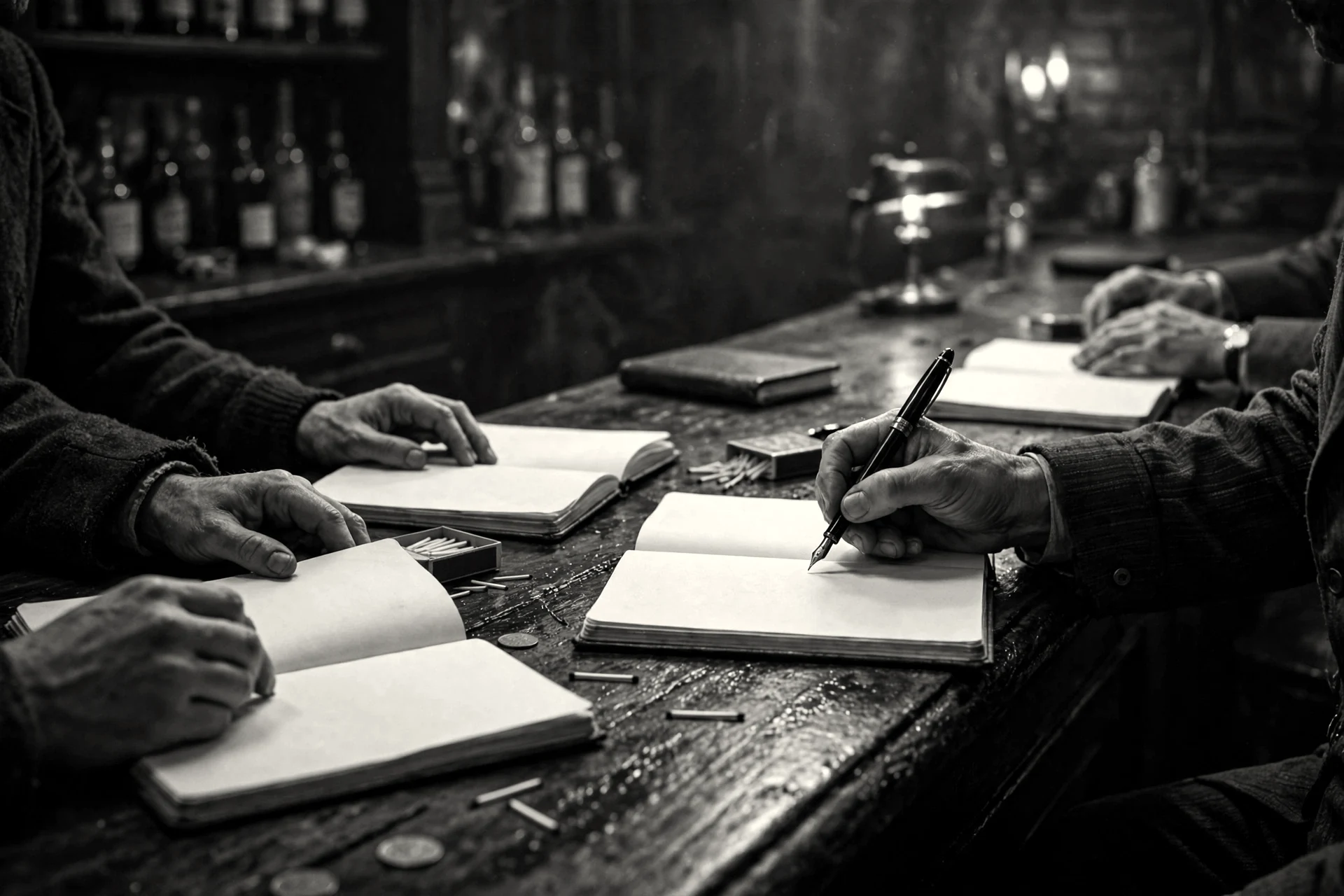
The books came out with twenty minutes of the ninety left, on Marcus’s schedule, which held. The bartender signed the four pages with the unhurried hand of a man who has signed a winter of them by now, and pressed nothing, and the rings went down one after another, each of them a coaster ring print from a wet glass, Marcus’s careful, Dana’s exact, Rose’s like a seal on a letter, Eddie’s placed where he meant it like everything he has done since October. At the far end of the bar, unattended, a second notebook sat closed, somebody else’s year waiting for its owner the way a coat waits on a hook.
It was while the pages were open that the bartender said it, mildly, in the tone of a man contributing a fact to an evening that had earned one. “You are not my only book this month,” he said. “There was a signature last week I keep thinking about.
A quiet man. Came late, left no fuss.” He turned a page of Dana’s book to sign the margin the house keeps. “He signed like a man apologizing to the paper.”
“Anyone we know?” said Dana, lightly, the way you ask about weather in a city you are passing through.
The bartender considered the question with the seriousness of his trade, which is considerable, and shook his head. “I would not repeat the name,” he said, “even if the name were mine to repeat.” And he signed, and that was the whole of it, and Marcus asked nothing, because Marcus had read the instructions for this door and courtesy was among them. Dana asked nothing either, but she clocked it, because Dana clocks everything: a refusal, delivered that cleanly, is itself a kind of signature, and she filed it beside the other signatures the winter had been collecting, the ones in books and the ones in behavior, and said nothing, and was right to, because the curfew came down on the evening like a kind hand and put them out into the street with their hats in their hands.
Outside, in the lamplight, the hats went back on, all except Marcus’s, which stayed in his hand a moment longer than the cold required, and Dana wrote her memory line in the car before they drove home, in her best hand, which Sam has seen and will paraphrase exactly once: it was about a man becoming someone who reads the instructions for things that matter to her. Preparation is the only love letter Marcus has ever managed to send on time.
The Willow bartender told me the rest of it a week later, across my own bar, trade to trade, the way we tell each other the things the books do not hold. The quiet man had ordered the zero proof and drunk it like a sacrament, and left his page signed and his glass empty and nothing else behind him at all. I did not ask the name.
A signature is a door a man leaves ajar on purpose, and I have learned to leave those standing.
Door facts, from the map: Willow, 1431 Times Square, Downtown, Detroit, beneath SavannahBlue, the soul food restaurant at the same address. The entrance is a golden door at the back of the restaurant: ring the doorbell to be let in. A seated bar, 50 seats for 50 guests; visits are limited to 90 minutes; groups larger than four need a reservation; cell phone use is strongly discouraged; men must remove their hats. Known for The Goat, the Willow Martini, a Champagne Cobbler and its Old Fashioned. Drinks and small plates: catfish fritters, wings and fries, charcuterie. Hours: Thursday 6pm to midnight, Friday and Saturday 6pm to 1am. Map: https://deadlycompany.co/detroit-speakeasy-scene/ · The challenge: https://deadlycompany.co/one-year-of-hidden-bars-and-speakeasies-tour/