 CompanyMade in Detroit | Est. 2026
34 Doors
Episode 8: The Aladdin Sane
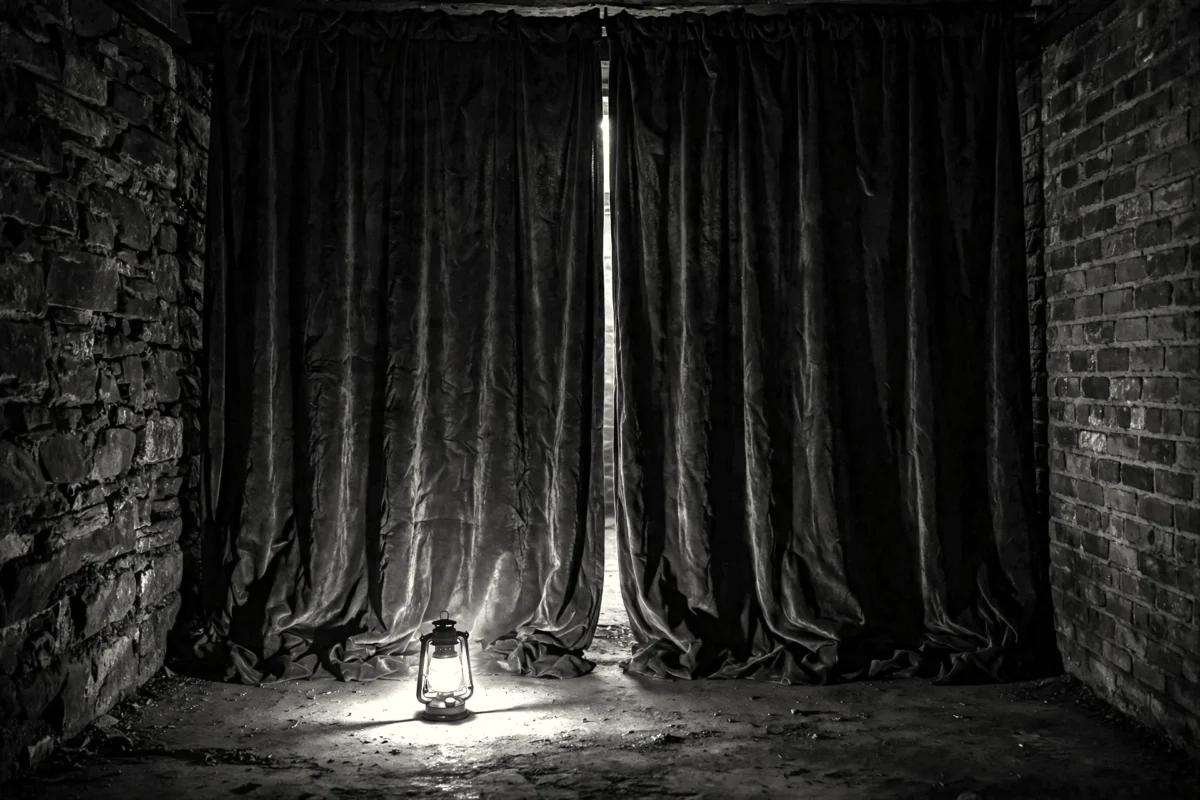
Door Eight is behind a curtain in the basement of the Book Tower, which is the most honest architecture in Detroit: a tower full of offices and restaurants and light, and at the bottom of it, behind a piece of cloth, a small room with nine bar seats where the city goes to lower its voice. The Aladdin Sane. Letti and Antonio’s door, their date night, the one evening of the winter that was supposed to belong to nobody but them.
I was not at it. I have it from Letti, who told it to me across my bar across two visits and one act of trust, and from the trade, which tells me everything eventually, and from my own eyes, at the end, which is the part I would give back if giving back were among the services a bartender performs.
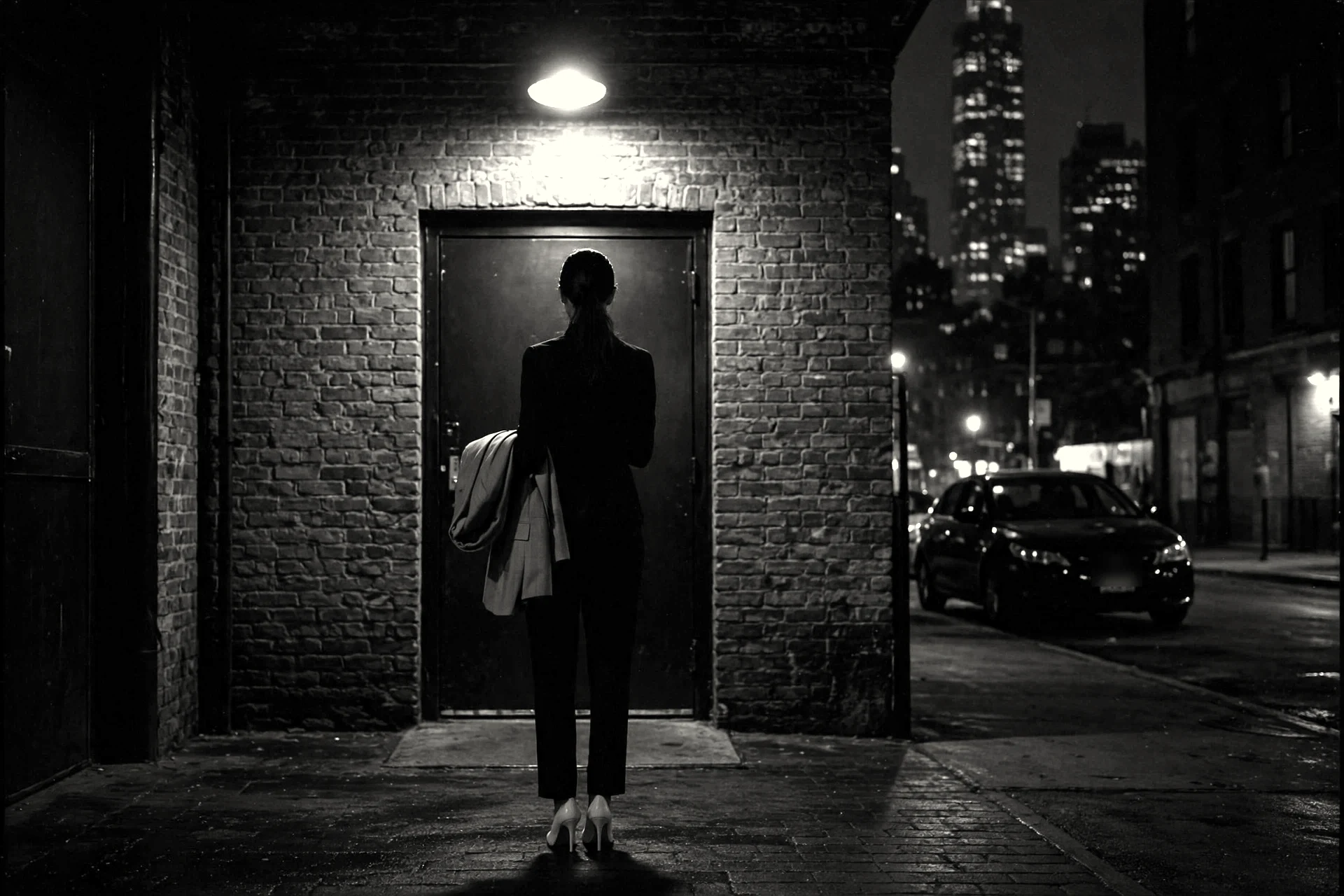
The tower’s own pourer told me the first part. He works two floors above the basement in question, in a room with windows, and he smokes where the service entrance lets him see the street behind the tower, and we have the arrangement the trade has everywhere: he tells me what his door sees, and I tell him what mine does, and neither of us writes it down. That night, a Friday, at an hour when the date was still young, he saw a car idle at the service entrance for eleven minutes with nobody in the street to justify it, and then a woman came out of the service door and stood in the lamplight doing nothing, beautifully, the way other people do things.
Pink heels. A man’s jacket folded over her arm, neat, like a valet holding it for a gentleman at the theater. Thirty seconds she stood there, facing the street, saying nothing to anyone, and then the car door opened from inside and she got in and the car left without hurry, and the street went back to being a street.
He told me as a curiosity of the trade. A woman like that does not hold a jacket like laundry. She holds it like a flag she is not flying.
I knew the heels. I had never seen them, but I knew them, the way you know a regular’s coat from the shape of the chair it leaves. There is a woman who drinks at my bar, some weeks, on no evening I have been able to predict, one drink, always the seat that faces the door.
I could not tell you her name. That night, for the first time, I could have told you her profession, or the silhouette of it, and I filed the tower’s thirty seconds beside the seat and the single drink and said nothing to the pourer, who is a professional and asked nothing, because the fraternity of the pour is mostly the fraternity of the unasked question.
Letti told me the date itself on the Tuesday after, at the slow end of my bar, in the hour when the room is mostly glasses being dried. She told it the way she tells everything that costs her: completely, in order, with the figures right, and only once did her voice do anything unadministered, and that was at the car. A wife reporting the exact four words a sentence got to before it was interrupted is a particular kind of evidence, and a bartender learns to keep it in its own drawer.
Behind the curtain, the date was being performed to perfection, and I use the word performed the way Letti used it, with love and accuracy in equal measure. Antonio in a small room is a great house act in an intimate theater. He knew the bartender’s name by the second drink, which he does by the first as a matter of policy, and the room’s one extravagance, the Japanese whisky, he navigated like a man reading a family Bible in the original.
The room is famous for the list. He was famous in the room by nine o’clock, which is his version of being on time.
There were rivals. Two strangers, a couple, Door People like ours, doing the same tour louder: matching enthusiasm, a door count announced to the bartender like a score, the notebook page photographed with the flash on, twice, in a room the size of a held breath. Letti watched them the way you watch weather in a neighboring state.
They were doing the ritual as content. She and Antonio do it as liturgy, and the difference, in a nine seat room, is the difference between a wedding and a broadcast of one. At the second flash Antonio did a thing she reported with her chin in her hand, watching.
He told a story, at the bar, slightly too loud, a story with his whole weather system in it, and drew the room’s attention onto himself the way a man steps between his wife and a draft, so that when the couple’s camera next went looking for the room, the room it found was him, arranged and lit and entirely willing. “He does crowd control the way other men hold doors,” she said. “You only notice if you are the weather he is managing.” She had been married to him for years.
She noticed.
The duet of the evening, and Letti told it to me twice because she knew I would want the wording, was about surrender. The room offers an omakase, the house composing three or four drinks like a tasting menu, and Antonio wanted it, wanted the whole composed evening, and Letti, who composes every evening of her life down to the minute, wanted one drink and a husband with nothing to administer.
“You want to be conducted,” she said.
“I want to be fed,” said Antonio. “There is a difference, and the difference is trust.”
“The difference is that you get to sit there looking like a man at prayer while somebody else does the arithmetic.”
“And you,” he said, “would rather do the arithmetic badly, alone, at our own table, than let a professional do it beautifully three feet away. It is the family religion. Your father does it with coffee.”
She laughed at that, surprised out of her, the laugh she does not schedule, and he looked at her the way he looks at a room he has just won, and gave her the evening anyway. “One drink, then,” he said. “And I will spend it entirely on you.
It is the harder reservation.” The bartender, a professional, composed one drink for her like a paragraph and poured him the whisky he had been reading about. The list is in Japanese and English and about four other intentions, and Antonio read the Japanese side the way he reads everything, as if it had been written by friends of his, and chose a bottle from a distillery that no longer exists with the ease of a man ordering coffee in his own kitchen. Letti watched him do it.
There are rooms of her husband she has the address of and has never been inside, and his fluency in them is not what troubles her. What troubles her is the rent he pays on them, in hours, and where the hours go. For an hour the performance had no seam in it anywhere, and Letti, who had asked for a date and been given one, told me she forgot the tour, the book, the count, everything except the curtain and the man, and that forgetting is the rarest thing she owns and she knows its price to the cent.
The books were signed at the bar, both of them, in the bartender’s careful hand. The rings they keep for the car. It is a small ritual of theirs, older than the tour’s rules and private to the marriage: the page signed in the room, the ring pressed in the parked car afterward, the two of them and the streetlight and the mark going down like a seal on the evening.
He had the books in his coat. She had the evening in hers.
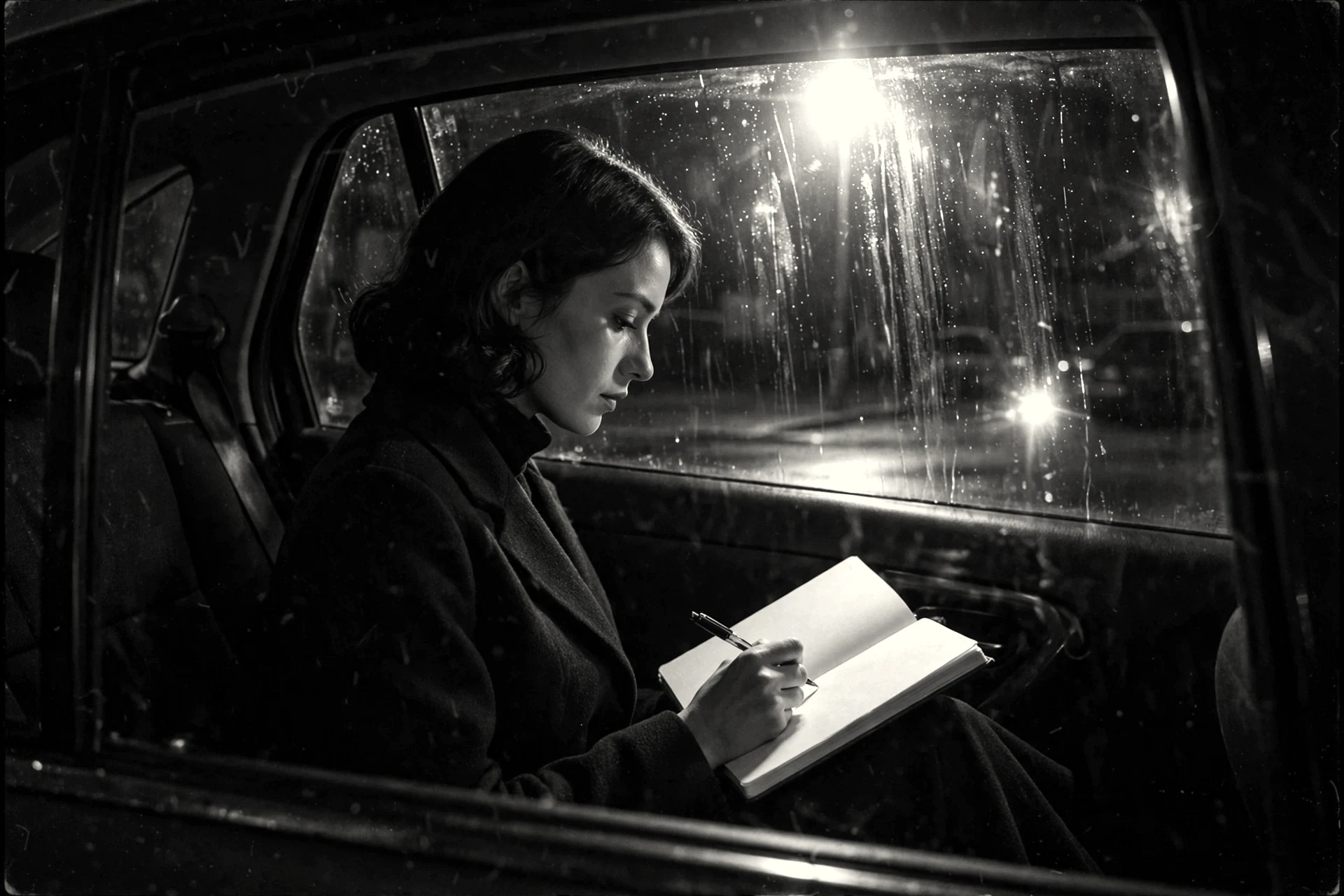
The car is where they press the rings. It was parked under a streetlight two streets from the tower, and he got in with the books and the two pens she keeps for the purpose, and he had begun, actually begun, the sentence he had been not saying all evening, the one with no performance in it. Letti has never repeated it to me and I have never asked her to.
I know its first four words were “When this is over,” and that it was going somewhere true, because she told me the room in the car changed temperature the way a room does when a person stops acting in it. The telephone lit against the dashboard. It did not ring.
Men in Antonio’s line of work, and I did not yet know his line of work, are summoned the way weather arrives, without announcement.
He looked at it. The performance did not resume; that is the detail she gave me twice. He did not become charming about it, or sorry in the theatrical way, or anything at all that a wife could hold.
He was simply elsewhere, instantly and completely, in the middle of her name. “The plant,” he said. “Something that cannot wait for morning.” He kissed her once, correctly, like a signature, and said he would be an hour, and got out of the car and walked toward the street with his coat over his arm, and a car she did not know slowed at the corner without stopping and took him the way the night takes weather.
Letti finished the page alone. She pressed her ring on her own page, a coaster ring print from a wet glass, in the streetlight, exactly where it belonged. On his page, where his ring should have gone down beside the signature the bartender had given them an hour before, she wrote the memory line instead, in her best hand, the hand she keeps for documents and verdicts.
It was not a complaint. Letti does not complain in ink. It was an inventory.
One hour. One drink. She closed both books and drove home with the ritual kept, entire, by one pair of hands, and if you want to know what the covering looks like when it goes solitary, it looks like a woman doing bookkeeping in a parked car and getting the figures right.
I locked up my own bar at the usual hour and came out the back way, the way I have come out for thirty years, into the alley that serves my building and the buildings behind it, where the loading docks stand in a row like a jury. The sound reached me first. I have heard it once before in my life, on Halloween, at the mouth of another alley, and I knew it the way you know a voice in a crowd.
On Halloween my feet had stopped on their own recognizance, union men downing tools. In March I stopped before the sound had even finished, because I had learned its name by then, and a man walks differently toward a thing he can already file. It was smaller this time.
That is the whole of the difference, and it is not small.
She was standing at the edge of the dock’s light with his jacket folded over her arm, exactly as the tower’s pourer had described her, neat as laundry, out of the weather of what was being done. The heels made sense of the seat that faces the door, and the seat made sense of the heels, and I stood in the dark of my own doorway and joined the two halves of a woman I had poured for for years without ever being introduced. Antonio was doing the work himself.
A man I did not know was going down the last of the way down, economically, the way a glass is set down by a man who has set down ten thousand: one decision, no temper, no second thoughts in it. The man stayed down, and he was breathing, hard and regular, the breathing of a man with something to stay alive for. Antonio spoke once, at conversational volume, the way you remind a man of an appointment he has already agreed to keep.
The man on the ground nodded. That was all. That was the entire violence of it: a sentence and a nod, at a loading dock, in March, with a woman holding the coat.
In October it had been administration: a face rearranged by somebody who knew the furniture, a man surrendering with the paperwork still to come, the pulp of it. In March it was an instruction and a nod. A beating is a business continuing.
What I watched at the dock was a business ending, one account at a time, closed by the head of it personally, in his good coat’s absence, with nothing wasted, not a blow, not a word, not a minute. He had never once asked me to keep a secret, and I had kept all of them.
They left in the idling car, unhurried, and the man on the ground sat up slowly against the dock, alone, in the way of a man who has been given terms and intends to live inside them. I went home and filed it where the Halloween filing lives, and I did not sleep the way I usually sleep, and in the morning I went to work and poured for the city as if the city were only the city.
Three nights later she came in at her hour and took the seat that faces the door, and I poured her one drink and we did not speak, and when she left she put her hand flat on the bar for one second, the way you steady yourself on a rail, and I understood that I had been entered in somebody’s books as well, under a heading I was not going to be shown.
Door facts, from the map: The Aladdin Sane, Book Tower, 1265 Washington Blvd, Downtown, Detroit. In the basement, next to Hiroki-San, behind a curtain: the bar’s own instruction is to step behind it. Walk in for the lounge, nine bar seats and lounge seating; the cocktail omakase, three or four drinks composed like a tasting menu, is the reservation-worthy experience. The name tips its hat to David Bowie, and the room keeps Detroit’s most extensive Japanese whisky list. Hours: Tuesday to Thursday 5pm to 11pm, Friday and Saturday 5pm to midnight. Map: https://deadlycompany.co/detroit-speakeasy-scene/ · The challenge: https://deadlycompany.co/one-year-of-hidden-bars-and-speakeasies-tour/