 CompanyMade in Detroit | Est. 2026
34 Doors
Episode 5: Café d’Mongo’s
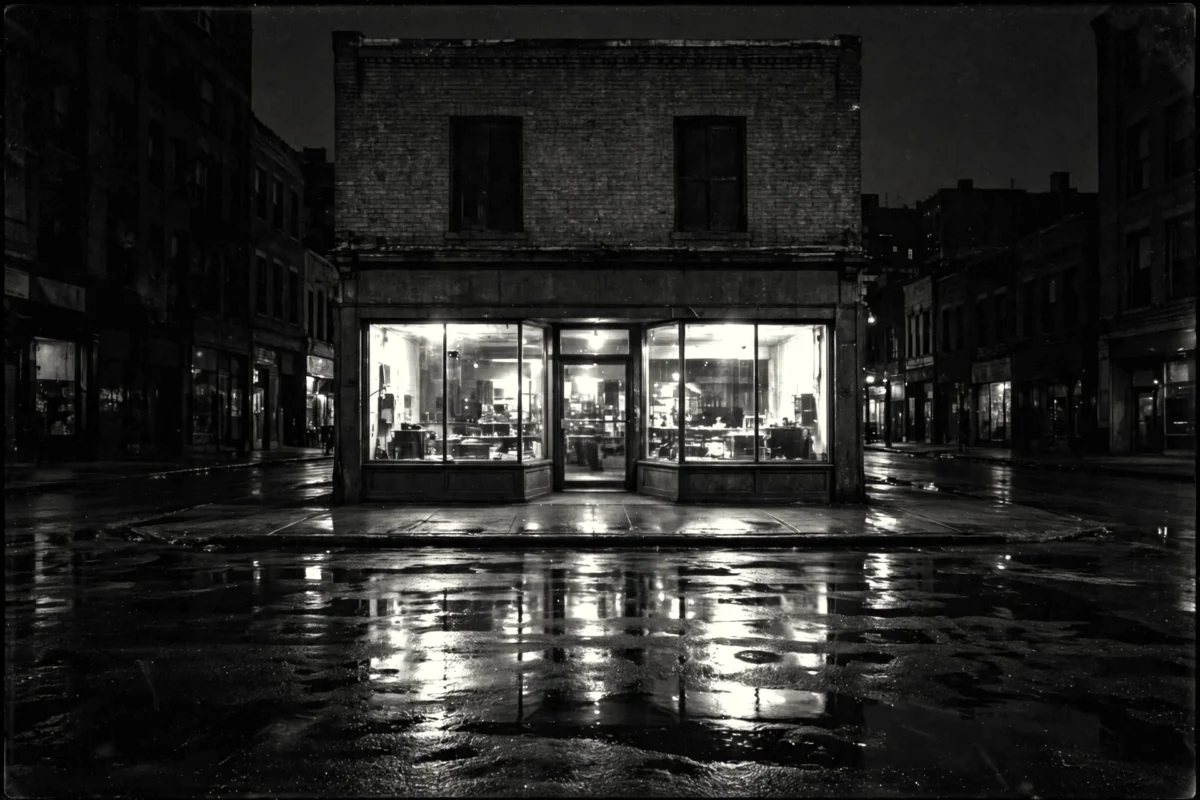
After a locked gray door with a snake on it, Door Five is a plain front door on Griswold Street, which a person could take as the tour running out of doors. It is the opposite.
Café d’Mongo’s has been a speakeasy the other way around since 2007: the door hides nothing, and the room is the secret, a tiny antique-crammed jewel of a place that has run on word of mouth for nearly twenty years while standing in plain sight. Some doors interview you. This one waves you in and trusts you to understand what you have been waved into.
I know this one from the elders. Rose and Eddie drink at my bar on Sunday afternoons, early, the way people do who have finished performing the weekend, and it was Rose who told me Door Five, across two whiskies and one story she made me promise to keep out of the record, which I have.
The rest is in the record. It is a good rest. They still come, those Sundays. In a year like this one, a man learns not to call a still a small thing.
Rose and Eddie are Dana and Marcus’s neighbors, which in Detroit is a rank, not an address. It was the elders’ door to host and the young ones’ to be taken to, and from the moment they came through the plain front door, the evening ran on Eddie’s decisions the way a train runs on rails it does not have to think about.
That morning, before eight, Eddie was on the young ones’ porch with a screwdriver, attending to the loose step outside Dana and Marcus’s door, because it was loose. He had not been asked. He has not been asked anything in that building for years, which is how he prefers the paperwork.
Rose watched from their window with her coffee, the way a lighthouse watches a harbor it has privately adopted, and when Marcus came out and began the thank-yous, the real ones, the too many ones, Eddie received them the way he receives weather and said the step would hold now.
Marcus went back inside feeling, without knowing why, like a man whose accounts somebody else is quietly keeping in good standing. That is the elders’ want, if want is even the word for a thing so settled. The young ones are to be alright. They pursue it the way other people pursue money: in small amounts, daily, without discussing it.
There was a wait, because on a Friday there is always a wait, and a doorman managing it with the patience of a man defusing something. Eddie gave their name and the number four and then stood in a way that communicated, without a word of complaint or a glance at his watch, that waiting was also an activity he had decided about.
It took nine minutes. Marcus used them to ask Dana whether she thought they should have eaten first, and whether she thought the thread would want photographs, and whether she thought Amaan had seen his message. Dana said she thought they were fine.
She was watching Eddie not decide anything at all about the wait, because there was nothing to decide, and file the difference. She has become, this winter, a professional watcher of the people she loves. It is not a peaceful gift. It is not a useless one either.
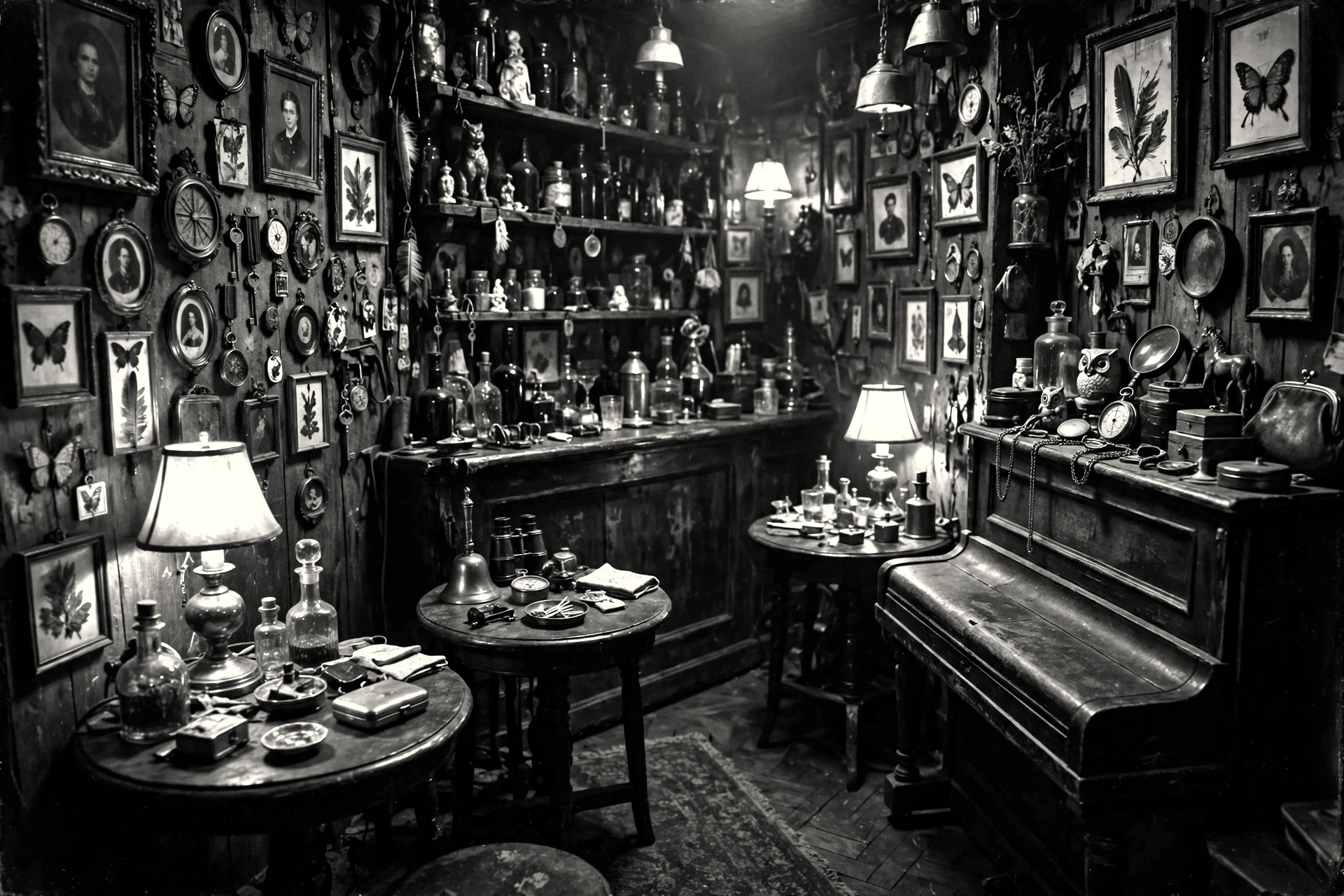
Inside, the room is a jewel box that somebody shook: antiques on every surface, a piano’s worth of clutter arranged by a mind that considers empty space a rumor, and in the middle of it Larry Mongo holding court the way other men hold a door, like it is the job and the pleasure of the job at once.
There is live music at Café d’Mongo’s, the kind that has to fit in the room too, and a smell of grilled cheese that has ended more arguments than any diplomat. Rose surveyed the clutter with the satisfaction of a woman in a room that agrees with her.
“Larry has been expecting us since 2007,” she said. “He just had not been given our names yet.” Larry, passing with a tray, received this the way a bishop receives weather: as his due.
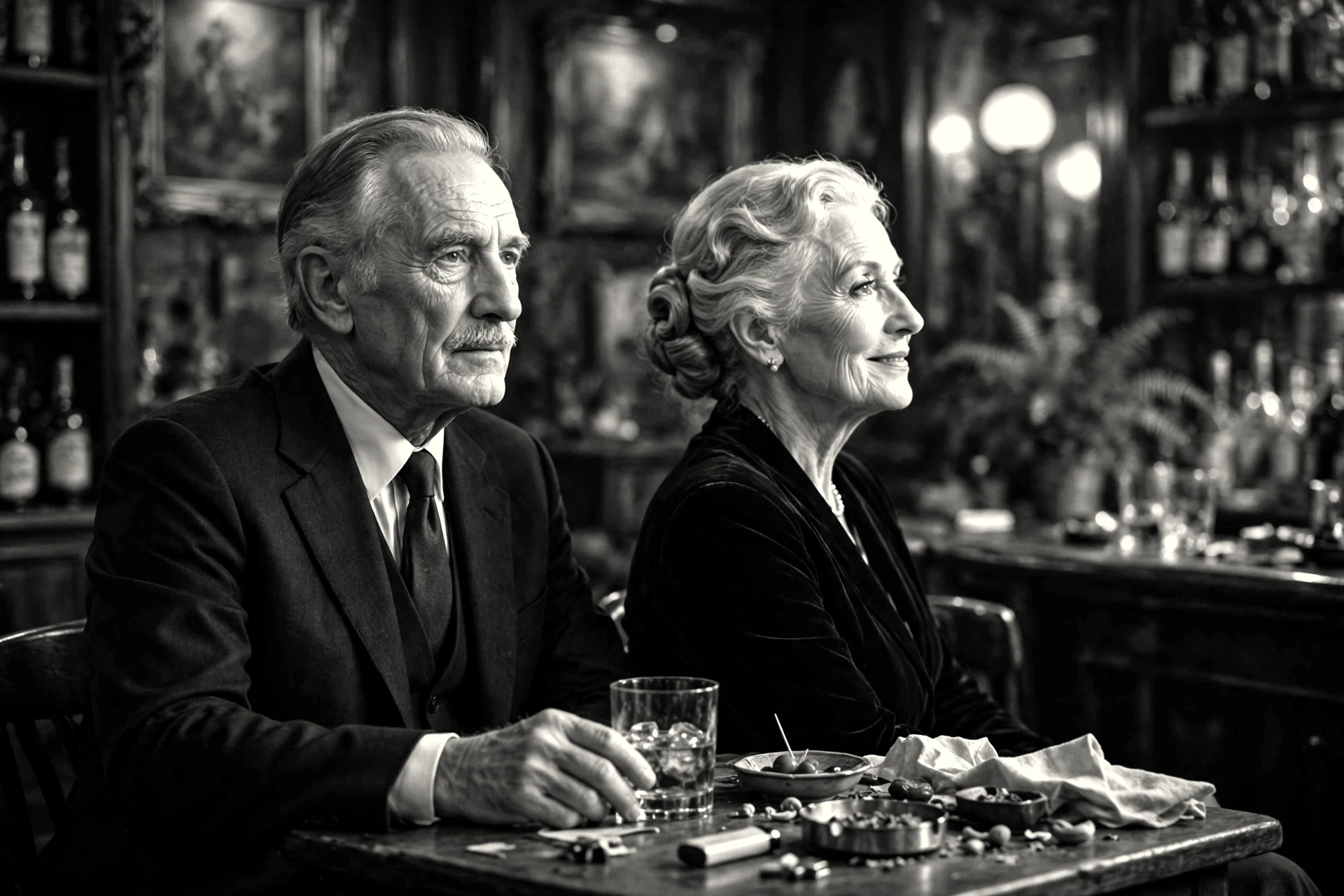
Eddie chose the table the way he does everything: once. The doorman, who had clearly been saving both, offered two.
“By the piano,” he said, “or the wall. The wall is quieter. The piano is closer to the music.”
“The piano might be…” Marcus began, in the tone of a man opening a meeting. “Although the door. And four of us, with coats. And if the music is loud, we lose the…”
“That one,” said Eddie, pointing at the wall, and sat.
The table he had pointed at turned out to be the right one in the way that a key is right, by fitting. By the wall. Clear of the door’s weather. Close enough to the music to hear it and far enough to talk over it. Rose arranged herself beside him like a queen who has never once had to arrange the furniture.
“Now,” said Marcus, opening the menu the way a man opens a contract he suspects of containing his own name, “we could start with…”
“We will have the Detroit Brown,” Eddie said to the bartender, “because we are in the room that invented it, and arguing would be manners in the wrong direction.” Four of them, decided in one breath, and the Detroit Brown, Crown Royal and bitters and Vernors, arrived like a local fact. “And the grilled cheese. Two.
They cut it the way it wants to be cut.” Marcus put the menu down with the air of a student who has just watched the examination answered by somebody sitting in the front row. He did not mind. That is the thing to understand about Marcus at Door Five. He was not embarrassed. He was taking notes with his whole face.
The grilled cheese arrived by Larry’s own hand, because some deliveries are inspections. “You are Rose and Eddie’s young ones,” he said to Dana and Marcus, in the tone of a man confirming a rumor he started. “The elders have been advertising you.”
“We deny everything,” said Dana.
“You won’t need to,” said Larry, and moved on, satisfied, the way a man leaves a table he has decided is sound.
The first Brown settled the photograph question too. Marcus had his phone half out for the books, the thread being a hungry animal that winter, and was asking the table, actually asking it: “If I send the page to the thread, does it please the group, or does it cheapen the page?” when Eddie said, without looking up from his glass: “Take it.
A thing kept is a thing had, and a thing shared is a thing kept twice.” Marcus took it.
The Brown, for the record, tastes the way Detroit would taste if Detroit were a drink somebody had thought about: whiskey with its collar loosened, Vernors doing the talking at the end. Marcus drank his like a man being handed a local fact and finding it true.
Rose, for her second, asked the bartender after a bottle by its year, the way other people ask after a friend: by name and with history. She did not ask what it cost, then or on the bill, and Eddie did not glance at it either, and I record this because a bartender notices who looks at the right-hand column of things. In twenty years behind a bar it is the only census of wealth I have ever trusted.
There was one consultation in the whole evening, and it is the whole of the lesson, so I will set it down carefully. When the second round was proposed, by Eddie, to the table, he looked first not at the bartender and not at the young ones but at Rose, and Rose gave him a nod so small it was practically private property, and only then did he order.
He decides everything, Eddie. He has simply kept a short and accurate list of the things that are not his to decide, and his wife is at the top of it in ink.
The books came out on the little table among the clutter, and Larry himself signed the pages, with a flourish that suggested he has been signing visitors’ books since before the visitors had a tour to put them in, and the rings went down one after another: Eddie’s first, without ceremony, a coaster ring print from a wet glass, exactly where he meant it to go, like everything else he had done since the doorman.
Rose pressed hers beside it with the concentration of a woman sealing a letter she fully intends to be read in a hundred years.
When it was time to leave, Eddie knew. Nobody checked a watch or finished a drink too fast or let the evening thin into logistics.
He simply stood at the moment the night was complete, the way a conductor ends a piece, and the table stood with him, and Marcus, rising, understood that he had been given a demonstration and that the demonstration had been a kindness and that both of those things could be true in a room that smelled of grilled cheese.
On the walk home he decided three small things in a row, out loud, without being asked. The long way, because the lights on Woodward were worth it. The errand at nine in the morning, not sometime, at nine.
And the elders to dinner at theirs on Sunday, his cooking, and he would call in the morning, not mention it and let it evaporate. Dana said that all sounded good, and she said nothing else, for the second door running, only this time the silence went nowhere near the drawer. He had not decided the date.
He had decided the long way home, and the hour, and Sunday, and standing at his own front door with the keys already in his hand, not patted for, not searched for, in his hand, Marcus understood that a course is finished the way a tour is: one small decided thing at a time, in the right order, until the big one is just the next one. The date waited where it had waited for three years, set for next year, in Dana’s keeping, in no danger of being decided early.
Door facts, from the map: Café d’Mongo’s Speakeasy, 1439 Griswold St, Downtown, Detroit. A plain Griswold Street frontage: here the speakeasy is the room, not the door, a tiny, antique-cluttered space that has run on word of mouth since it reopened in 2007. Walk in only; expect a doorman and a wait on Friday and Saturday nights. Two drinks were invented here: the Detroit Brown (Crown Royal, a splash of bitters, Vernors) and the 1439 (rum and Faygo Rock & Rye). Order the grilled cheese. Live music; Larry Mongo holds court. Hours: Thursday 5pm to 11pm, Friday 5pm to 1am, Saturday 7pm to 1am, with minor variance. Map: https://deadlycompany.co/detroit-speakeasy-scene/ · The challenge: https://deadlycompany.co/one-year-of-hidden-bars-and-speakeasies-tour/