 CompanyMade in Detroit | Est. 2026
34 Doors
Episode 4: Bad Luck Bar
Bad Luck Bar seats about thirty people, and I am not one of them. A room that size has no use for a stray bartender, and a door that stays locked has even less. What I know of Door Four I know the way I know most things worth knowing.
Dana told me, across my own bar, on a slow night in February, and she told it well, and she left one detail standing in the middle of it like a coat on a hook, and the detail is where the story lives. Bartenders listen for the shape of what is missing. It is most of the job.
There is a woman who drinks at my bar, some weeks, on no evening I have been able to predict. One drink. Always the seat that faces the door, taken the way other people take a window seat on a train, without discussion. She is gone before the late crowd finds its volume. I have poured for her for years. I could not tell you her name. That is not an oversight. That is the arrangement.
That week the morning show had a new favorite. The Door People bit had grown regulars the way bars grow regulars, and the newest was a caller from Northville who would only be introduced as Elvis. Not an impersonator, the hosts were careful to say. A successor.
He called to explain that in his youth he had been the King’s own voice, dubbing the singing for foreign screens, and that he spoke fifteen languages, Russian best of all, and the hosts, who between them command English and some sports, believed every word of it and wrote none of it down. Elvis, to my knowledge, had never required the help. But it is a good station. It knows what a voice is for.
Letti is awake at six that morning in a kitchen that is not expecting her, in a house where everything that works works because she maintains it, and for eleven minutes she does nothing at all, beautifully. One chair. One coffee. The light coming up over a city she will shortly begin administering.
Antonio is asleep in the other room with the confidence of a man who has never once been the person a day depends on. She does not think about the tour, or the booking she has already made for that night, or the husband whose lateness she could set her watch by if she chose to.
She thinks about nothing, in a disciplined way, like a musician resting between movements, and when the eleven minutes are spent she rises and becomes, again, the woman the rest of this episode requires. Nobody in this story knows the eleven minutes exist.
She let them slip once, at my bar, and then looked surprised at herself, the way a person does when a private country gets mentioned at customs. They are the only appointment in her life she keeps by refusing to keep it for anyone else.
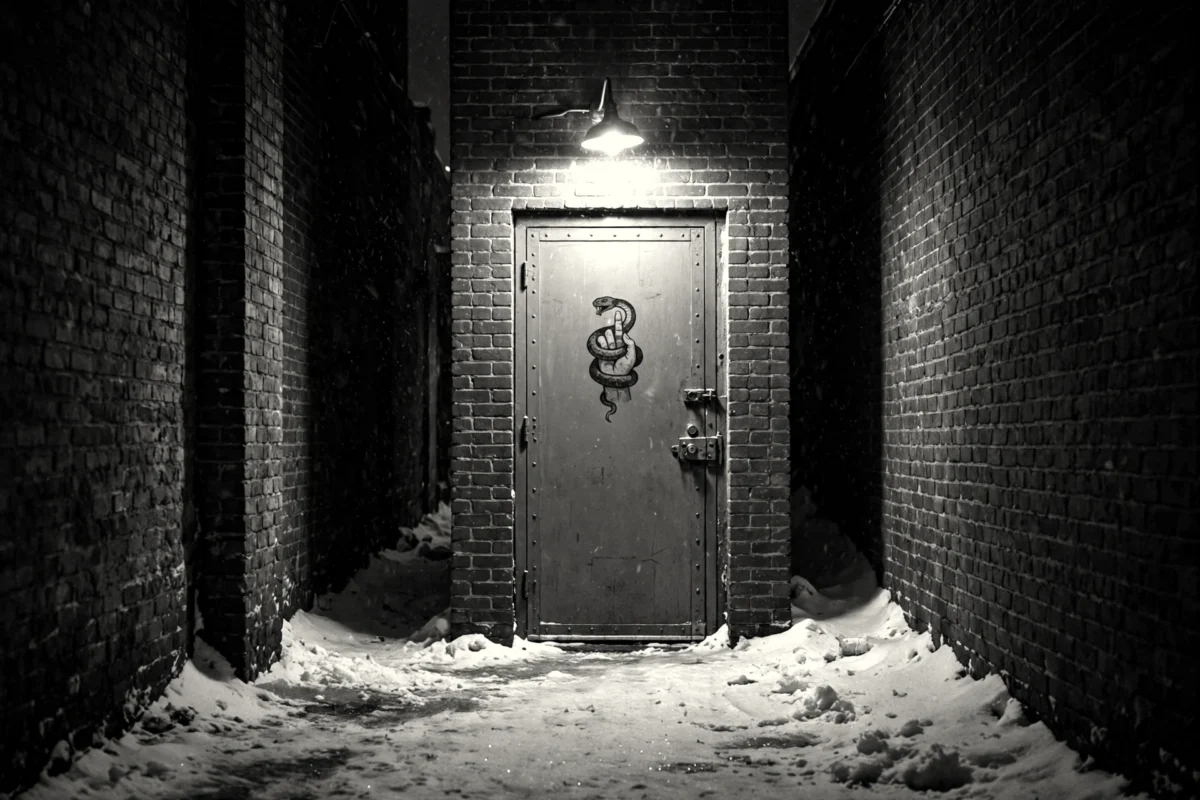
Door Four is a gray door in an alley in Capitol Park, marked with a snake and a hand, and it stays locked, which in Detroit is not an obstacle. It is an interview. The address on Griswold Street will get you to the building. It will not get you inside. For inside, you knock, or you call, and calling is what Letti had done, the way other people arrange surgery.
She had called on the Tuesday: a party of four, at seven, under her name; the limit of six, the call on arrival, every answer written in the spreadsheet she keeps for the tour, in a tab Dana is allowed to read and not touch. There are people who experience a locked door as a problem. Letti experiences it as a form, and she had already filled it in correctly, in triplicate, with the confirmation memorized.
At seven on a February night, in an alley smelling of snow and somebody else’s dinner, Letti knocked like a woman with an appointment with the door, and the door, properly approached, opened.
“The Lodge was so empty,” Marcus said, reading the snake and the hand the way he reads everything on this tour, twice, with respect. “I felt rude using it.”
“He is parking,” Letti said to the man at the door, fondly, in the tone of a woman reporting weather she has arranged herself, and the man nodded and held the door wider, because thirty seats run on trust and timing and Letti had supplied both before she arrived.
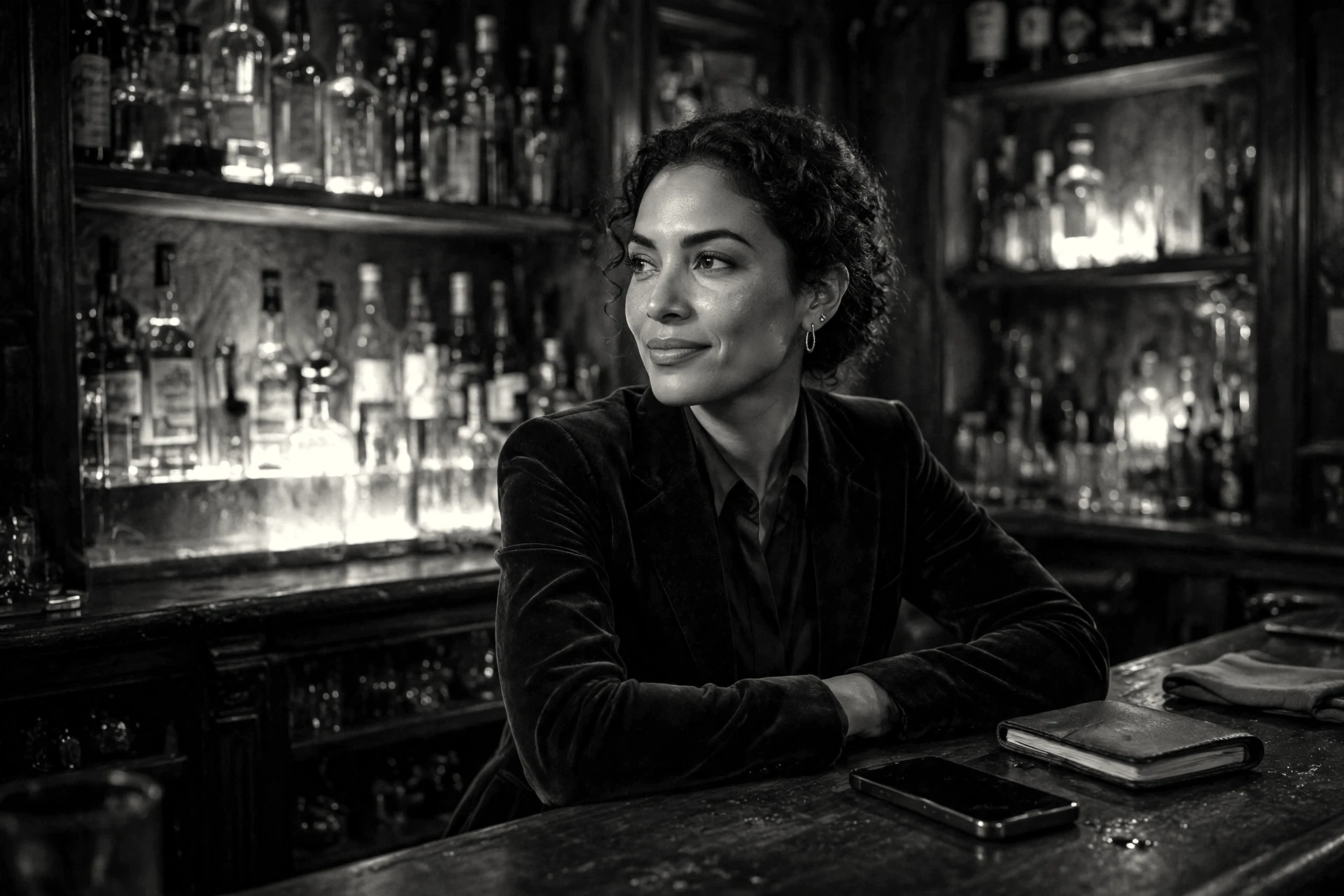
The room received them the way small rooms receive people who have done the paperwork: completely, and at once. Low light. Bottles behind the bar that a collector would cross a border for, sitting in a room the size of a good secret.
The bartender had their names from the booking and used them like he had been expecting these exact four people since the building went up. Three of the four people, anyway. The fourth place stood set and empty, water poured, menu waiting, a small held note in the evening’s music.
She had meant to do nothing that night but drink. The intention survived four minutes.
“What can I start for you?” said the bartender.
“The Fifth Sun for her,” said Letti. “She trusts the process. Something with rye for him. He receives instruction as scripture.”
“The rye,” said the bartender, setting it down in front of Marcus, “is older than the building’s opinions. Sip it like it can hear you.”
“And for you?”
“The Admiral,” said Letti.
“You know what it is.”
“I know what everything in this room is,” said Letti. “It is the burden of my life.”
She ordered it without asking the price, which in that room is the whole sentence. Antonio’s chair she left to its water and its menu. He would order when he arrived. He was, after all, only parking.
Amaan, in the group thread, from his own couch, sent a photograph of a double he had poured himself and four words: Door Four, in spirit. Letti archived it without comment, which from Letti is a form of applause.
At eight minutes past, the notebooks came out, because by Door Four the notebooks come out early, the way regulars stop pretending to read a menu.
The bartender signed three pages with the concentration of a notary and pressed nothing, the rings being the customers’ own sacrament, and Dana pressed hers, the mark going down clean beside his signature, a coaster ring print from a wet glass, and thought about how a room this small leaves nowhere for a person to be unfinished in private.
“Your fourth,” said the bartender, at ten minutes past, topping up the water beside the empty place. “Shall I hold his round with yours?”
“He orders for himself,” said Letti. “It is a point of theology with him.”
“Should we text him?” said Dana.
“He knows where the door is,” said Letti. “He is the only man in Michigan who can be late to a locked room and arrive expected.”
“Traffic’s clear, anyway,” said Marcus. “We came in on the Lodge and there was nothing on it at all.”
Nobody picked the sentence up. It sat on the table between them like a fourth drink nobody had ordered.
At twelve minutes past, Letti’s phone lit up on the bar, face down, the way she always leaves it, and she read whatever it said with her eyes only, and smiled, and turned it over again, gently, like a card she was keeping.
The knock came at twenty past seven.
Three raps, unhurried, the knock of a man who has never once doubted that a door would open for him.
“That will be him,” said Letti, warm as toast, before the bartender had fully turned. “The Lodge was a parking lot tonight.”
Dana had the obvious thing ready. It was small and true and cost nothing: we came in on the Lodge, it was empty, Marcus has been apologizing to it all evening. Four seconds, and no malice at all.
She watched her friend’s face instead, the easy fond smile already turned toward the door, and understood that the sentence about the Lodge had not been built or weighed or decided. It had simply arrived, complete, the way a bartender’s hand arrives at the right bottle. Dana picked up her drink. The door opened.
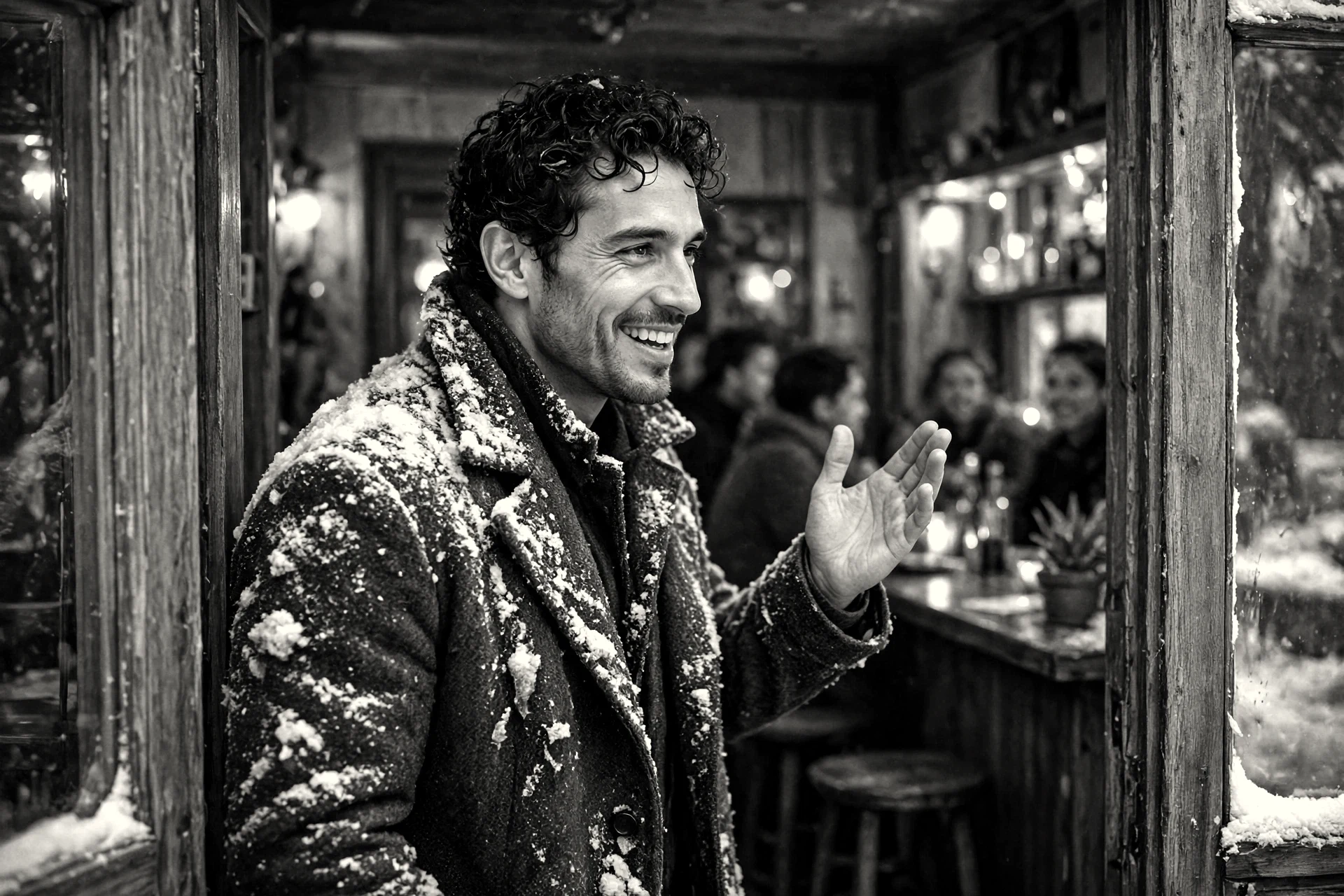
Antonio came in out of the February cold with the snow still on his shoulders. “Forgive me,” he said, to the room in general and the bartender in particular. “A traffic jam. Historic. Archaeologists will dig it up and argue about it.” He complimented the door, the light, the company, in ascending order.
“You found the only one in Detroit,” said Letti, and kissed his cheek, and meant the smile entirely.
The room forgave him for a lateness half of it had not noticed and the rest had been talked out of by a traffic jam that did not exist.
One thing more from that night, which Dana told me as nothing, the way the truest evidence in this story keeps arriving. When Antonio came through the door, a man at the end of the bar looked at him the way you look at weather changing, set down a drink with a good inch left in it, and left, unhurried, like a person remembering an appointment in another country.
“Poor man,” Dana said. “He had only just got it.” I have poured for thirty years. Men leave full drinks for fires, for wives, for news. They do not leave them because charm came through a doorway.
He was wonderful. That has to be said plainly, because Dana said it plainly to me, later, with the respect of a professional witness. He ordered from the rare end of the back bar like a man reading a family tree. He made Marcus laugh so hard the bartender paused to enjoy it.
He asked Letti, in front of everyone, how she had gotten them into the best room in Detroit on a Friday, as if the booking had been an act of grace and not an act of administration, and Letti glowed the way people glow when their labor is mistaken for their nature. The books came out again for his page. His ring went down hard and theatrical and slightly off true, and he admired it like a flag.
Door Four sits in four notebooks now, signed and sealed under a gray door’s mark, locked in, counted, complete. It was, by every measure the tour keeps, a lovely night.
Dana told me all of it across my bar, the door, the drinks, the knock, the glow, and she told it well, and the one thing she did not tell me was the sentence she had not said in the alley of the evening, the small true sentence about an empty freeway. I worked it out the way bartenders work things out, from the shape of the missing piece, and I have kept it where she keeps it.
She has a drawer, Dana, for things that are true and unhelpful and not hers to spend. It already held one item before February: a wedding date, hers, set for next year, where it has been kept, carefully, for three years running.
She put the Lodge in the drawer beside the date and closed it gently, the way you close a door you fully intend to open later, in better light. She loved her friend. That was the whole of it, and it was not the whole of it, and both of those were true, and it was only February.
Door facts, from the map: Bad Luck Bar, 1218 Griswold St, Capitol Park, Detroit. The entrance is not on Griswold: it is a gray door in the alley behind the building, off State Street, marked with a snake and a hand, and it stays locked. Knock, or call ahead, and they will let you in. About thirty seats; parties of six or fewer. Known for The Admiral, built on 1970 Black Tot rum, The Fifth Sun, and a back bar of rare spirits. The listings disagree about the hours, which the door policy makes academic: you are calling anyway. Map: https://deadlycompany.co/detroit-speakeasy-scene/ · The challenge: https://deadlycompany.co/one-year-of-hidden-bars-and-speakeasies-tour/