 CompanyMade in Detroit | Est. 2026
34 Doors
Episode 6: Evening Bar
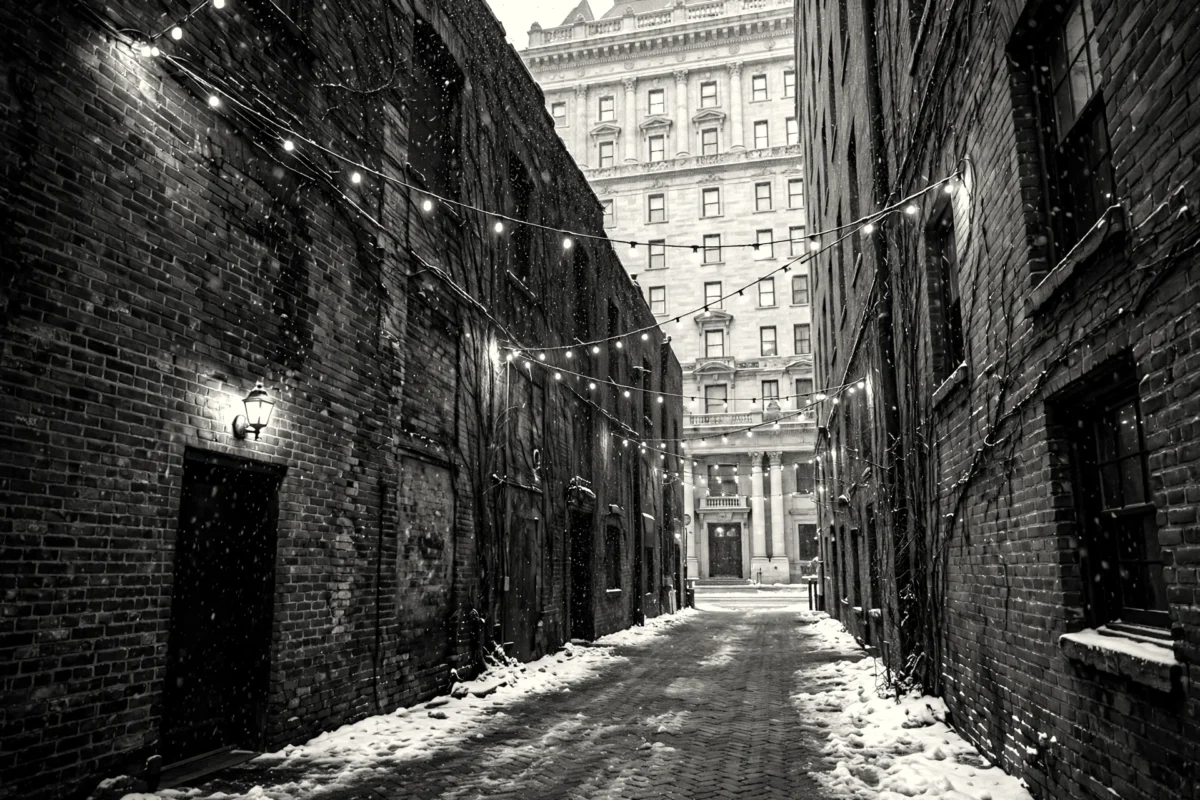
Evening Bar has two doors and both of them are good manners. You can go in through the Shinola Hotel lobby, in the open, like a citizen, or you can come the discreet way, through Parker’s Alley behind the hotel, like you know something.
Amaan chose the alley before anyone had finished asking, because Amaan has never once entered a beautiful room by its front door when a side door was available and feeling neglected. Marcus told me this one. Amaan never has, which is also information, and I have filed it with the rest.
It is a beautiful room, forty-five seats of polish and low light, the kind of room that makes people sit up straighter and then forgives them for it.
The maître d’ knew Amaan’s name from a wedding he had photographed two summers ago, a connection of the wife’s family, the way half of Amaan’s Detroit seems to be a connection of somebody’s family, and they were seated with the small ceremony due to regulars, which Amaan accepted the way he accepts weather in his own honor, as a climate he generates.
“The alley way,” Marcus announced in the alley, as he had in the car, for the record, “is the correct way. A front door is information. A side door is intent.”
“You have been on this tour six weeks,” said Amaan, “and it has made you a philosopher of entrances. Your fiancée must be warned what she has started.”
At the next table, a man in a good coat, a stranger, a Detroiter, caught Amaan’s eye and gave him the greeting the city gives him most weeks of his life. “Salaam alaikum, brother.” Amaan returned it whole, warm, hand to heart for half a beat, “Wa alaikum salaam,” and wished the man a good evening, and the man went back to his evening entirely content, and Marcus sat there with his mouth full of an observation he was sensible enough to swallow.
Amaan is a Punjabi Hindu from Rawalpindi whose name and face have been filing him under Muslim since he was old enough to be filed, and he corrects neither the name nor the filing, because he decided long ago that a man who greets you in peace has not made an error worth the name.
The error, if error is the word, is never his to fix in public. He would rather be misread kindly than read correctly and coldly. There are worse religions. He has mentioned this. It is practically his.
At the bar, a young couple with a notebook between them like a hymn book were having the quiet, shining crisis of people who had walked in without a reservation on a Friday: phenomenon people, Door People, three weeks into their own year. Amaan read their situation from two seats away the way other men read a racing form. He leaned over and opened the case.
“First door or sixth?” he said.
“Third,” said the young man, guarding the notebook, which was fair, because it was a hymn book. “We were told there might be two seats at the bar.”
“There are always two seats,” said Amaan. “Rooms keep them for luck. The difficulty is being luck when the room looks at you.” He turned to the maître d’, who had been approaching at the speed of a man who has seen this film.
“My colleagues. Newly faithful, three weeks into their year, out without a reservation on a Friday, which shows either courage or a recent conversion. The two seats the room keeps for luck. I will vouch for their ringing.”
The maître d’ considered the notebook, the couple, and Amaan’s face, in ascending order of reliability. “The luck seats are at the end,” he said. “Drinks on…”
“On me,” said Amaan. “And tell them nothing about the Fizz. A person should meet the Fizz unprepared.”
By the time their drinks arrived, on his instruction and his tab, the maître d’ had found them the two seats the room keeps for luck. Nobody had asked him to do any of this. That is the thing about Amaan’s magnificence that the word magnificence does not quite cover: it is logistics. He is kind at production scale, with seating charts.
Marcus reported the four minutes to me later with the pride of a man describing weather he had personally enjoyed. He had not yet learned to time the other thing: how long the magnificence takes to resume.
Dana, the professional, ordered the Ramos Gin Fizz because the room is famous for making it properly, which means a shake long enough to constitute a short ceremony, and Amaan narrated the wait like a man calling a horse race in a cathedral, sotto voce: “And they’re shaking.
Shaking is all they do. The gin is questioning its life. The egg white has seen things. In the final furlong, the bartender’s arm files for divorce,” until she was laughing into her hands and the bartender was shaking harder out of professional pride.
“If he drops it,” said Dana, “I will tell the room you made him.”
“He will not drop it,” said Amaan. “He is a professional. Watch the wrist. It is the wrist of a man who has never once been believed about how long this takes.”
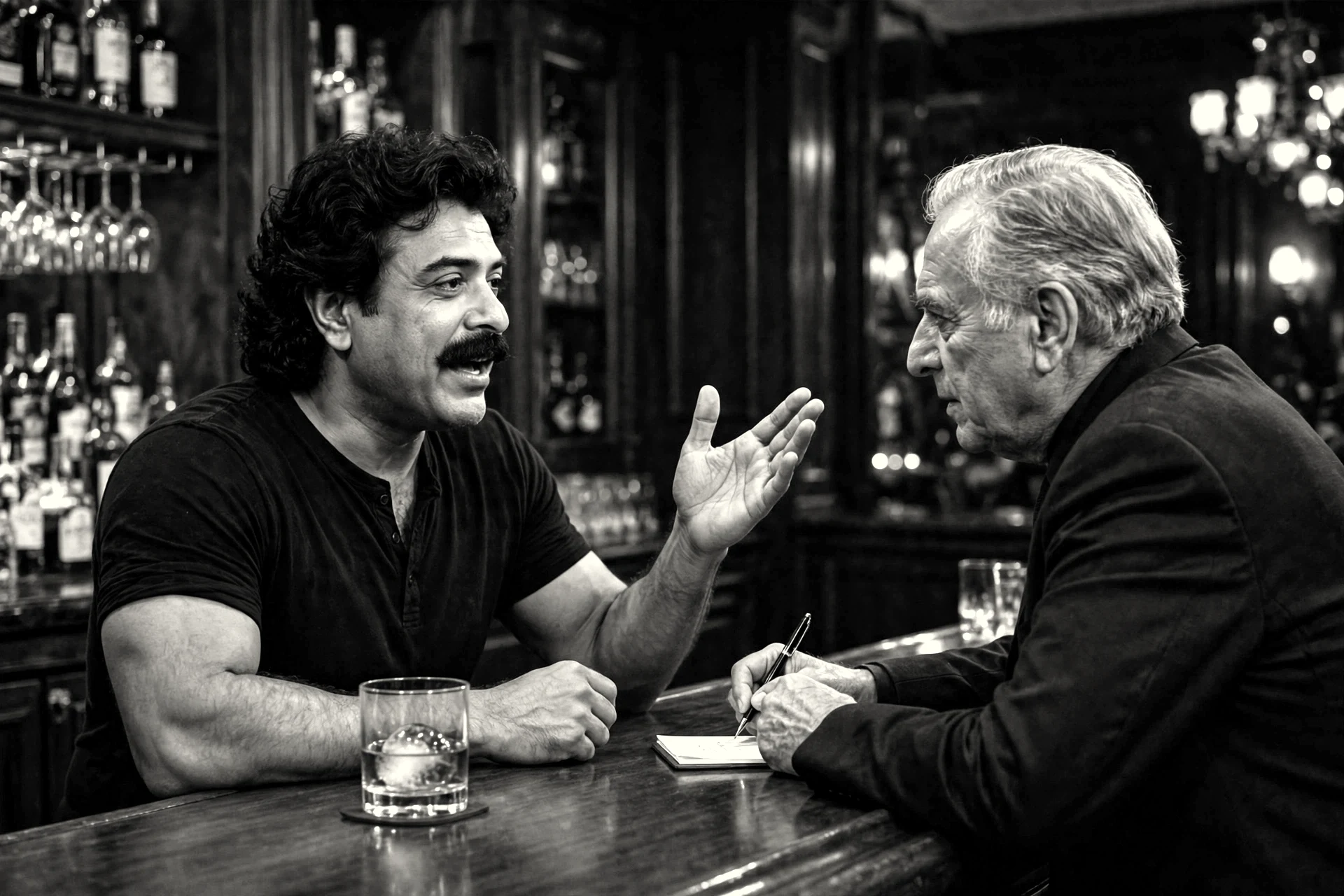
Then Amaan ordered, and the room got the full ceremony for the first time. “A double of Laphroaig,” he said. “One finger for me, and another for the pasoori. One cube.” The bartender, a professional, did not ask. Professionals can tell the difference between an order and a liturgy, and they pour a liturgy the way it is written.
The double came over its single cube exactly as ordered on earth, and Dana, who has filed most of Amaan’s liturgy by now without once asking for the catechism, asked the one question the liturgy invites. “And the pasoori are?” “Regulars,” said Amaan, and raised the glass to them, wherever they were, and drank.
I know what the word means. He told me once, at my bar, at an hour when men translate themselves, and it is his to give away, and in that room, on that night, he did not give it. A bartender keeps what he is told at that hour in the same drawer he keeps everything. Mine is getting full this year. I notice I do not mind.
The books came out between the Fizz and the lobster rolls, because by Door Six the books come out the way grace gets said in houses that say it, without discussion.
The maître d’ signed three pages with a flourish that suggested the Shinola keeps a man on staff for penmanship, and the rings went down one after another, Amaan’s wide and confident, Marcus’s careful, Dana’s exact, each of them the same small sacrament: a coaster ring print from a wet glass. The room approved. Beautiful rooms approve of rituals. It is what the lighting is for.
The message came while Dana was laughing at something the maître d’ had said, which is when these things generally come. Amaan’s phone lit against the bar, and he read it with his eyes only, and his face did a thing it does not do in public, a small rearrangement, quickly corrected.
A family matter, the wife’s family, a plan for the weekend that had been settled, by him, correctly, in writing, some days before. It had now been unsettled, and the unsettling was written in the tone of a woman correcting an error she had caught, kindly, the way you correct a child who has brought you the wrong shoes.
He stepped out to the alley door to answer it, because Amaan does his private business under the sky like a man taking a call from a country he used to live in, and he answered at length, kindly, generously, paragraph by paragraph, a man being gracious at production scale about being wrong when he was right.
Marcus, who had been laughing for an hour in a warm room, stepped out a moment later for the cold, and stood in the alley being politely not there, and heard, through the door left on its latch, one side of it, in pieces, in the tone of a man reading terms he has already signed.
“No. No, that is fair. … I had it as Saturday because it was Saturday. It was written down as Saturday. … Then Sunday. You are right. Sunday is better. Sunday was always better.”
The door opened. “Marcus,” said Amaan, delighted, as if the alley had produced him on purpose. “You are missing Dana laughing. It is a sound a man should insure.”
He came back in laughing at something the doorman said, and was magnificent for another hour, and ordered Dana a second Fizz on the grounds that the first had been a rehearsal, and the reply, when it came, came while he was mid-story and the table was mid-laugh, and it was one word long. “ok.”
He read it with his eyes only. He put the phone face down on the bar, gently, like a card he was keeping. And he finished the story so well that the next table applauded, which they had not done for the music.
Marcus watched the magnificence resume like a man watching a great house relight itself room by room, and could not have said afterward which room stayed dark. Dana, who clocks everything, clocked nothing. She was laughing too hard, which may be the exact arrangement Amaan would have chosen, if choosing were ever what he was doing.
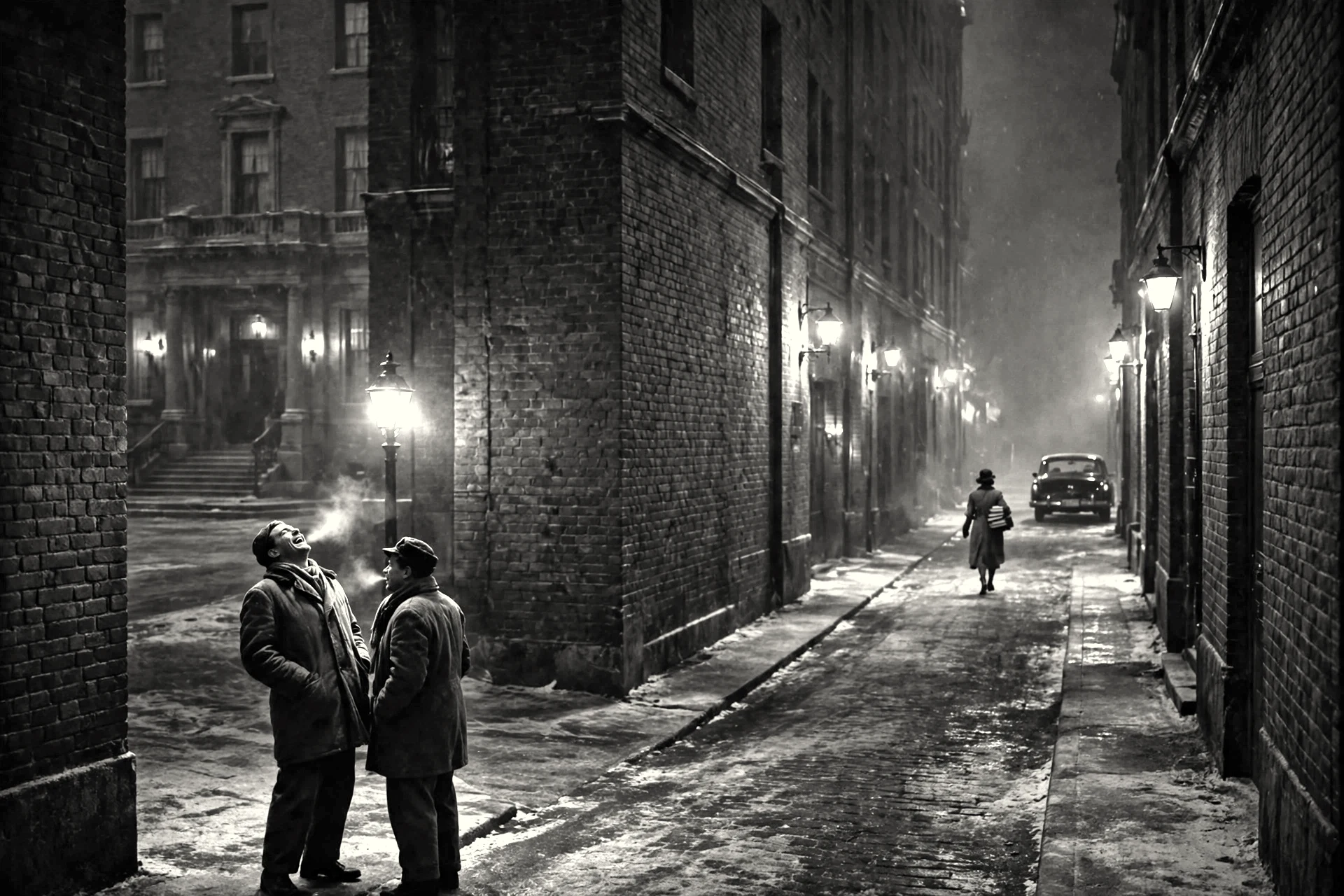
Outside, the alley gave them back their coats and their breath. February had kept the cold in good order. Dana went ahead to the car with the books, because Dana understands which exits are hers to make, and the two men stood a moment in the lamplight with their breath smoking, best friends since before the tour, since before most things.
“You alright, man?” Marcus said. It was not a small question. It was asked the way Marcus is learning to ask things, plainly and once. “Always,” said Amaan, a half-second too fast.
Only Marcus heard the hairline in it. He told me about it later, across my bar, with the discomfort of a man reporting a sound a bridge made. He did not know what it meant.
He knew he had heard it, and he knew Amaan would rather he hadn’t, and those two facts together are most of what Marcus currently knows about his best friend’s marriage, which puts him a full chapter ahead of the rest of the world and a year behind the truth. There is a smaller thing I have kept back, because it is small.
At the Shelby, in January, Amaan said we, about that apartment, the way a man reads a sign that has not changed yet. Tonight, telling the story of the weekend his wife corrected, he said I four times, by my count, and we not once. A bartender counts what changes in a regular’s order. His had. A half-second is nothing. A half-second is the whole story, if you pour for a living.
Door facts, from the map: Evening Bar, inside the Shinola Hotel, 1400 Woodward Ave, Downtown, Detroit. Two ways in: through the hotel lobby, or discreetly, through Parker’s Alley behind the hotel. Reservations on the bar’s own site are recommended, and open 28 days out; walk-ins are welcome, check in with the maître d’. A 45-seat room. Known for a properly made Ramos Gin Fizz, the Smoke and Passion mezcal cocktail, and lobster rolls. Hours: Monday 5pm to 11pm, Tuesday to Thursday 5pm to midnight, Friday and Saturday 5pm to 1am, Sunday 5pm to 11pm; the booking page governs. Map: https://deadlycompany.co/detroit-speakeasy-scene/ · The challenge: https://deadlycompany.co/one-year-of-hidden-bars-and-speakeasies-tour/